
My son was a shooter. Here’s what blinded me to danger.
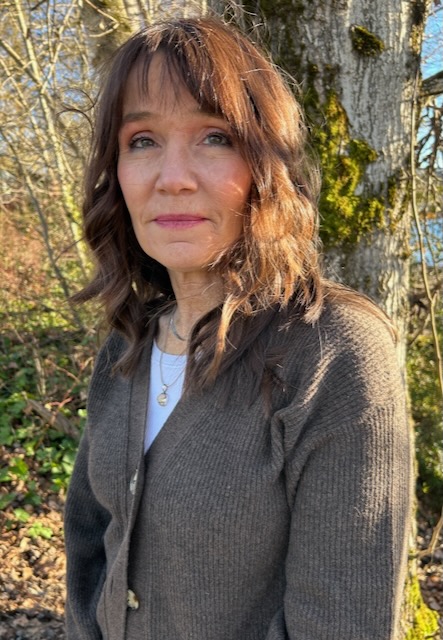
Hi Friends. Dave and I wrote the following article, thinking we’d try to place it somewhere. But given that the 10thanniversary of my son’s shooting is Friday, I decided to publish it here instead. I hope it can serve as an anchor piece that allows me to write more on this topic without retelling the story every time.
From the get-go, my son, Noah, was a skeptical kid who took little at face value. When I would tell him, “There’s nothing you could ever do to change how much I love you,” he would take it as a challenge. “What if I robbed a bank, Mom? What if I punched Nathan in the face? Would you still love me?”
I assured him that I would.
Once he asked, “What if I ran away from home?” We’d recently read Where the Wild Things Are.
I told him, “I would be so sad if you left. But I would still love you.”
I don’t remember if my son ever asked, “What if I killed someone?” At five or six, Noah probably couldn’t conceive of murder. But if he had asked, I would have said yes, never dreaming that someday he would put me to the test.
Someday came October 31, 2015.
On that Halloween Day ten years ago, Noah walked out of his apartment in Colorado Springs, Colorado, armed with an assault-style rifle. Then he went on a shooting spree, killing the first three people he encountered before being killed by police. His victims, none of whom he’d met before, were Andrew Myers, 35, Jennifer Vasquez, 42, and Christina Galella-Baccus, 34. Each was a parent of two.
At the time, my son was 33 years old, and we lived in New York City, two time zones away. But in the critical days leading up to the shooting, my husband, Dave, and I were in almost daily contact with him, mainly through long texts because he kept hanging up on us. We knew by then that he was in a mental health crisis, undoubtedly triggered by his going off his bipolar medications in favor of cannabis and, later, a stimulant called modafinil, which he ordered from overseas.
Naturally, we were extremely concerned, and during his final two weeks, we begged him to get help and tried our best to intervene. We took certain steps; we failed to take others. But in light of the tragic outcome, we will always live with sorrow and regret that we didn’t do more, and sooner.
Which leads directly to the mystery I want to address here: Why do even loving, well-intentioned parents so often miss the signs of a troubled young man’s slide toward violence? To personalize the question: Why, especially given that Noah owned guns (he’d owned three for many years), did it not occur to us that he could be capable of harming others?
I propose that a big part of the problem is hiding behind a single word.
Whenever I heard about yet another soulless gunman murdering innocent people, I muttered to myself about monsters. We hear the same sentiment echoed in the news and on social media. And who can blame us? What Noah did was, indeed, a monstrous thing. A heinous act that made him less than human in that moment.
But I’ve come to see that when we label perpetrators monsters, we unwittingly propagate a false picture of what a would-be shooter looks like. And it’s the exceptionally rare mother (or other loved one) who is ever going to look at her troubled son and see an evil creature capable of senseless murder.
I certainly couldn’t.
In a painful bit of irony, it’s not a stretch to say that in the lead-up to the shooting, my son’s general good-guy reputation was the most dangerous thing about him. It convinced us and those around him, probably including his coworkers, that he was not at risk of unleashing violence despite his troubling changes in behavior and mood.
While research shows no single profile of a mass shooter, there are clear, recurring patterns that loved ones can know and act on. This is the story of my journey to learn the truth about shooters and what we should be looking for.
Of course, I understand that nothing I could do or say will undo the damage my son unleashed that morning in Colorado. But if just one other mother or other loved one of an at-risk young man sees themselves in our story and recognizes danger sooner, our effort will have been worthwhile.
~~
In so many ways, Noah was the antithesis of the guy you expect to go on a shooting rampage. Yes, he had struggled with alcohol before getting sober at 26. And at 27, he was diagnosed with bipolar disorder (which runs in our family the way cancer does in some others). But he had never been in trouble with the law, had never hurt anyone, or threatened to. He had a great work ethic, cared about his health and fitness, had plenty of friends, and—best of all—was extremely close with his family.
In the aftermath of the shooting, I clung to this picture of Noah to the exclusion of any other. Since I still believed that shooters were monsters, I decided that Noah was a complete anomaly—a glitch in the universe. He could have nothing in common with those soulless killers we see on the news or read about online.
It took years of therapy before I was ready to question this convenient assumption.
One day, I decided to do my own research on mass shooters. At first, not objectively, I’ll admit. My heart still led the way. In all the stories, all the data, I had my eye out for any shred of evidence that my son was unique in the pantheon of multiple murderers—that there had never been a less likely shooter.
But that’s not what I found. While there is no single profile of a shooter, experts point out commonalities that appear across cases. Commonalities include being a white male; owning an AR-15; having a victim mindset; being angry or aggrieved; having had a recent crisis in a relationship, finances, or at work; having serious, untreated mental illness or psychosis (which it should be noted is not a risk factor for violence on its own); and being suicidal.
Right away, I felt the data stalking me.
After hours of exploration, and much to my dismay, a likeness of my son kept coming clearer on the page. At least in the last two weeks of his life, Noah shared many of these characteristics. And his step-by-step unraveling, which had seemed to us like a private family ordeal, now began to look like an almost predictable path to tragedy:
- In 2014, Noah stopped taking his bipolar prescriptions and began to self-medicate. Not surprisingly, he started at this time to pull away from a recovery community that had for six years kept him grounded and given him a sense of belonging.
- By late summer of 2015, now using cannabis and modafinil heavily, Noah was noticeably hypomanic (mildly manic). When we saw him in late July for a family wedding and a funeral in the Pacific Northwest, he was overly talkative, optimistic, sociable, and kind.
- By mid-October, Noah was entering his first full-blown episode of mania. He soon became obsessed with an online anti-government guru who imagined a scary and conspiratorial world. He also became uncharacteristically hostile toward me and his biological father.
- The following week, his last, Noah at times seemed delusional and increasingly paranoid; he became genuinely frightened of mysterious “evil forces.”
- On Friday of that week, he exhibited behavior that was bizarre and sexually inappropriate. The next morning, Dave and Noah’s brother, Nathan, flew to Colorado Springs to intervene and get Noah hospitalized—but they were too late.
- By Saturday morning of Halloween, when Noah emerged from his apartment heavily armed, he had apparently left sanity behind. Outside, he saw a mortal enemy riding by on a bicycle and other hostile targets sitting amiably on a porch around the corner.
This wasn’t a portrait of a man least likely to become a shooter. It was a picture of a dangerously deluded young man, armed for mass casualties, careening toward a bad end for himself and others.
The truth was hard to swallow. The implications harder still.
Up to this point, I had wanted to blame the shootings entirely on the fact of Noah’s psychological breakdown.
But the more I read, the more I saw the fallacy behind my reasoning.
Yes, I believed—and still do—that Noah would never have committed his crime had he been in his right mind. But it was time to admit that psychosis was not the only reason it happened. After all, thousands of people experience breaks with reality every day, and they don’t go on shooting sprees.
As psychosis dawned, it mattered who Noah was. His emotional state. His memories. His core beliefs. His preferences in reading and listening. All of his life’s experiences up to this point, including his choices.
And it was Noah’s own strongly defended but reckless choices that made him vulnerable to a violent psychosis in the first place.
On another crisp fall day so like the one when my son went on his shooting spree, I made my own choice: To hold Noah morally culpable for the deaths of Andrew Myers, Jennifer Vasquez, and Christina Galella-Baccus.
Not because he was a monster.
Not because he was evil.
But because he wasn’t.
~~
A couple of years later, I read the groundbreaking book, The Violence Project: How to stop a mass shooting. Authors Jillian Peterson and James Densley, both professional criminologists, conducted a massive amount of research on mass shooters, including interviewing five perpetrators. Their goal in the book and on their website is to help us better understand the path these young men had taken to their crimes and how society can intervene sooner to prevent tragedy.
Peterson and Densley identify four common patterns among shooters: Trauma in childhood. A story of grievance. Access to guns. And, a serious life crisis.
It was the last one that really caught my attention.
The authors write: “Nearly all mass shooters reach an identifiable crisis point in the days, weeks, or months before their violence—something that pushes them over the edge. For some, this is a relationship ending or the loss of a job. For others, it is an interpersonal conflict or mental health crisis.”
The idea that Noah had been in a crisis wasn’t new. But the idea that, for certain vulnerable young men, a serious crisis was a catalyst for most mass shooters was.
Peterson and Densley emphasize that by “crisis,” they mean marked changes in behavior. They write that “a true crisis is communicated through a change in behavior from baseline—something different or unusual from that person’s norm, something noticeable.”
Consider the following data from Peterson and Densley’s book.
Signs that mass shooters were in crisis before their shootings (and the percent that exhibited the behavior)
Increased agitation, 67%
Abusive behavior, 42%
Isolation, 40%
Losing touch with reality, 33%
Depressed mood, 30%
Mood swings, 27%
Inability to perform daily tasks, 24%
Paranoia, 24%
One to four signs of crisis, 43%
Five or more signs of crisis, 38%
During his final days, my son demonstrated at least five of these signs. We saw the increased agitation, the paranoia, the mood swings. At times, his angry outbursts at me (“Rot in your chains, Mom”) felt abusive. And, as he lost touch with reality, daily tasks of self-care, such as eating and sleeping, seemed to fall away.
Of course, it’s important to note that a person could show many of these signs and never harm themselves or others. So while these are not certain indicators of violence to come, they are clear invitations to vigilance, and possibly, intervention.
Noah’s changes were definitely marked, but at the time I didn’t know how to read them. If only I’d had access back then to this kind of information!
This is why I’ve found the work of The Violence Project so helpful. Their data shows that we should be looking out for vulnerable and troubled young men experiencing a crisis, not just for someone who looks evil or even threatening.
Which takes us one step closer to dispelling the myth of the monster.
As the mother of a shooter who failed to see danger coming, it’s a message I want to help spread. If we’re ever going to reduce the number of senseless shootings that leave us all so devastated, we need to understand and accept that before any of these perpetrators picked up a gun, they looked like our fathers, our brothers, and our sons.


 Heather Kopp
There’s so much painfully-gotten insight here, Heather. Thank you for pushing beyond grief, and helping others to better understand one of the most brutal realities of our world.
LikeLike
THAT was hard to write! You’ve had such a journey. God bless you.
Sam
LikeLike
Your transparency and vulnerability really touches me as a writer. God calls me to write about the hard things in life, and it can be a challenge that I want to avoid. But in the end many are helped through our honesty and baring our souls and messy lives. Thanks for encouraging me again. You are a writer about whom I’ve said, “I want to write more like her.” You have often been in my thoughts and prayers over these ten years. God bless you on this journey.
LikeLike
I want to acknowledge that this was extremely difficult for you to write, and commend you for what you are doing in educating others. I’ve missed your blog and thought of you often over the past decade. Thank you for what you have to share..
LikeLiked by 1 person
I’ve missed my blog, too. I keep hoping someday I will have the time and ability to keep it going again in some form. I’ve learned not to promise much, though. I have this wonderful problem of having a lot of family and grands nearby, and of having a day job, too. Thanks so much for your comment.
LikeLike
Thank you for sharing this information.
LikeLiked by 1 person
Heather, bless you for being so brave and insightful. This will help people. Please keep writing! Love you–Holly
LikeLiked by 1 person
Holly Holly? Oh geez, friend. It’s been years and years, hasn’t it? It’s so kind of you to leave this comment. Gonna go see if I can find you! I’d love to know how you are.
LikeLike
Dear Heather. I Stole God From Goody Two Shoes was a favorite book of mine and I was so moved by I Went to the Animal Fair. I’ve been following you for years and was so heartbroken to hear about Noah.
This article shows your bravery and willingness to allow the suffering you’ve experienced be a help to others.
I don’t know if you have ever read anything by Father Greg Boyle. After decades of working with gang members he believes he has never met an evil human being. He tells us that people who do awful things are not healthy but that doesn’t make them evil or, I would add, monsters.
May you know God’s peace.
Marci
LikeLike
Marci, this went straight to my heart. I can’t believe you go back with my so far! Wow, how the years pass, and life does not unfold as we thought it would. Thank you so much for your kindness and for taking the time to write this.
LikeLike
Thank you!
LikeLiked by 1 person
Your voice is so important in this moment. Society (all of us) needs to hear the sounds of your heart, even after it has been ripped apart; maybe even as it is being torn apart–it is in your voice that Noah’s humanity is returned.
Most families of shooters understandably slip into self-imposed exile; hiding from the vulgar fascinations of an insensitive public, who see themselves as self-appointed “monster” hunters. Unfortunately, the families take with them the pictures of their loved one when they were two, and 12, and the Christmas just before.
Bryan Stevenson’s quote haunts me in this regard: “Each of us is more than the worst thing we’ve ever done.”
Thank you for your courage to engage on such a difficult and painful issue. The world needs your voice. We need your family. We need the rest of Noah or we will never understand who our own children are, or are becoming.
You were closest to the terror of that moment, and you are the messengers needed for so many families who are right now agonizing about what to do with their own loved one.
I truly believe you are saving lives.
jeff lilley
LikeLike
Jeff, I’m going to print this out and put it somewhere I can see it. It meant so much to me. Thank you, thank you.
LikeLiked by 1 person
Heather —
You and I corresponded long ago, and we had a very kind exchange. I reached out to you when this all first happened, and I can understand why you did not reply. Reading what you’ve written here, it sounds like there has been so much more to think about, experience, and process.
What you’ve shared here, I think, is very important. Thank you. And please know that I have always kept a spot in my heart for you. I “knew” you before, my heart made space for you when Noah did what he did, and I’m glad to know you now.
I think you are very special. And I wanted you to know that.
Warmly — ~Lisa
LikeLiked by 1 person
Lisa, wow. So great to hear from you. And your words! I loved this note so much. Thanks for reaching out after the tragedy. And now, too! I hope we’ll keep in touch!
LikeLike
Thank you, Heather, for sharing your journey. I followed you for several years before this tragedy and have thought of you through the years and wondered how you were doing. I know this will help many people. God bless you and your family.
LikeLiked by 1 person
Thanks for your kind comment. I really appreciate you taking the time.
LikeLiked by 1 person
Heather, thank you for sharing your heart in such a beautiful and transparent way. When you first shared about this tragedy, my heart went out to you and it helped me to not look at mass shooters as monsters. They could be any of our sons. Thanks for sharing this info that will hopefully help prevent another shooting.
LikeLiked by 1 person
Thanks for your meaningful comment. Means so much to hear that.
LikeLike
Heather, I have been following your writings for years. In 2011, my grandson died by a self inflicted gunshot. Thank you for your research and supplying parents and those of us who can use it, this type of information.
LikeLiked by 2 people
I’m so sorry for your loss. How heartbreaking. I appreciate you following my writing. It’s been so very sporadic since the tragedy. I hope to write here more.
LikeLike
This must have been very difficult to write. Even with red flag laws it seems these paranoid and delusional people have guns or are able to keep their guns. Thank you for your insight.
LikeLiked by 1 person
Yes, it was hard to write. We actually wrote a whole book, from which this article is in some parts drawn. I agree about the red flag laws; wish they worked better. Colorado didn’t have one when Noah committed his shooting. But now they do, thank God.
LikeLiked by 1 person
This must have been a gut wrenching article to write. Thank you for your bravery and for sharing.
LikeLiked by 1 person
It’s hard to believe it’s been ten years since that horrible day. Lifting you both (and Nathan) up during this season.
LikeLiked by 1 person
Your comment shows up as Anonymous. Thanks for lifting us up.
LikeLiked by 1 person
Dear Heather,
Thank you so much for sharing in this way. It has and maybe will continue to be a hard journey for you. I do remember you from time to time. May you know our Father’s comforting presence day by day.
Every blessing and many thanks,
Esther
Sent from Outlook for Androidhttps://aka.ms/AAb9ysg
LikeLiked by 2 people
Thanks so much for this comment. Means a lot and I take it in.
LikeLike
beautifully written, real, transparent.
LikeLiked by 1 person